
What Bartow County Tax Records Contain
The assessment card and the tax account answer different questions.
| Field | What It Shows | Where |
|---|---|---|
| Fair-market value | Assessor's estimate of full value | Board of Assessors |
| Assessed value | Georgia's 40-percent assessment base | Board of Assessors |
| Exemptions | Relief applied to the parcel | Assessment record |
| Bill and status | Charges, payments, delinquency | Tax Commissioner |
| FiFa / sale clues | Collection activity | Tax office |
A tax bill never proves a sale price. Millage applies to the taxable assessed value after exemptions, while the consideration on a deed records a separate transaction altogether.
Read Bartow's Assessment Notice
Bartow's assessment notice packs in the owner and mailing address, parcel number, district and land lot, description, acreage, exemptions, current and prior fair-market value, the 40-percent assessed value, and the stated reason for any change. That is a lot on one page. The Board of Assessors page hosts the official search.
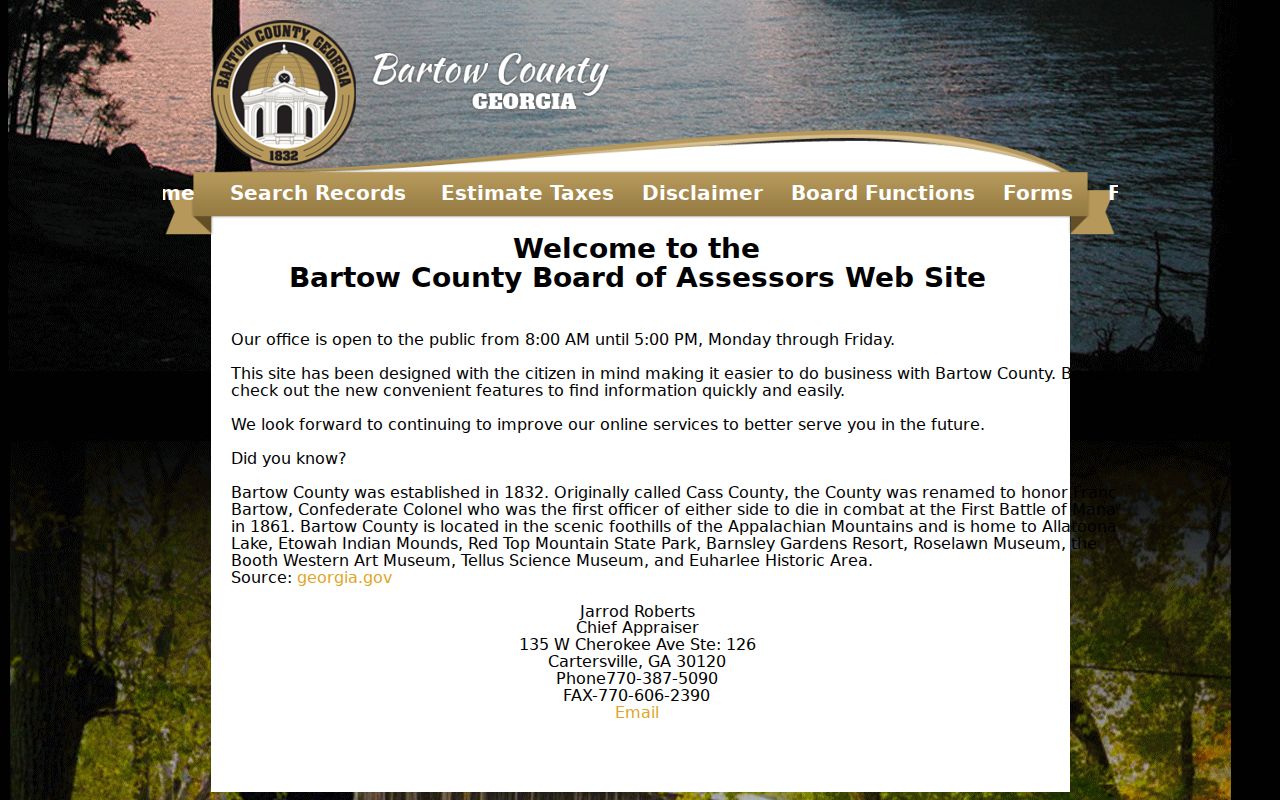
Check the digest year before comparing the notice with a deed or tax account.
Look Up a Bartow County Tax Bill
Bills and payments live in the Tax Commissioner portal, the official billing entry. Start from the parcel number that qPublic shows.
- Identify the parcel and tax year in the assessor record.
- Search the Tax Commissioner account and compare parcel details.
- Read bill, payment, and delinquency status for the intended year.
- Return to the assessment record for values and exemptions.
- Assessed value
- The statutory assessment base.
- Millage
- The rate applied to taxable value.
- Homestead exemption
- Qualified owner-occupancy relief.
- Tax lien
- A claim arising from unpaid property tax.
November 15 Anchors the Tax Calendar
Bills generally go out September 15 and fall due November 15, with delinquency following the deadline, according to the Tax Commissioner information. Confirm the dates for your tax year. The official timing page lists the details.
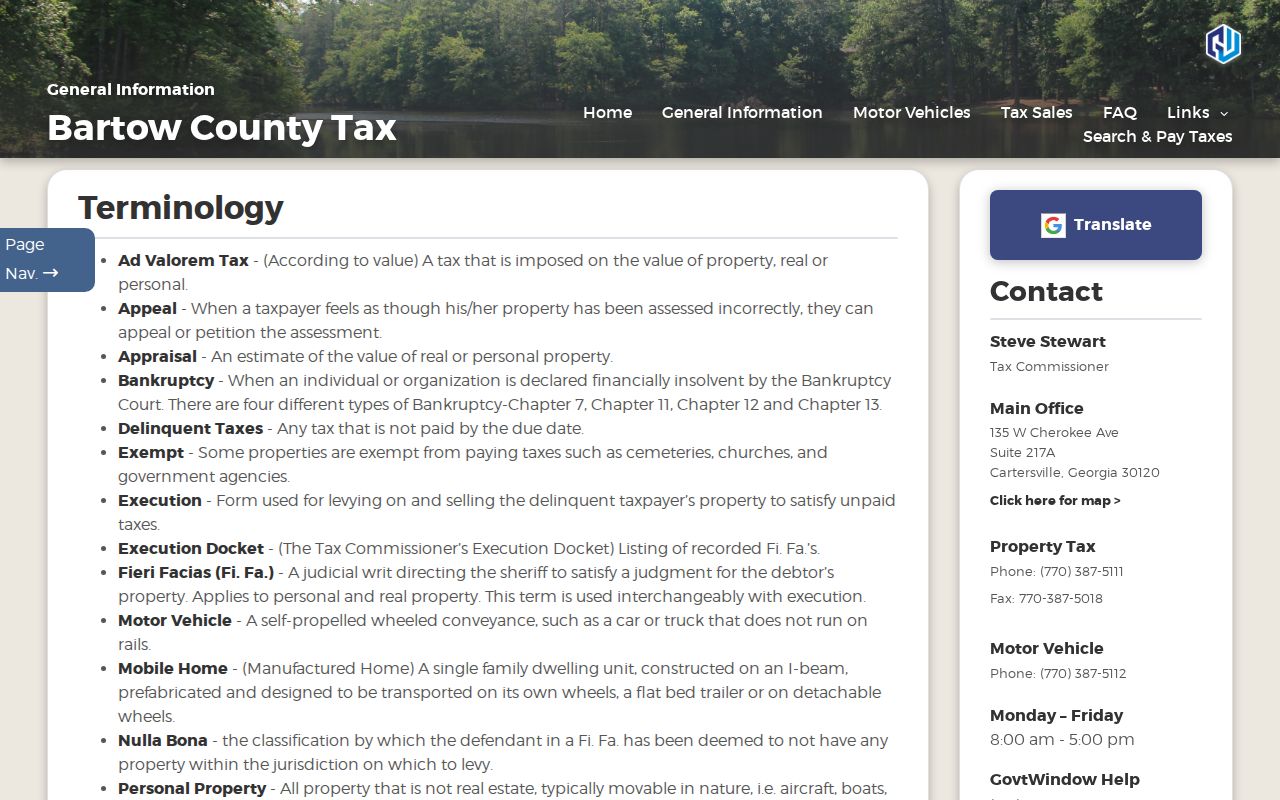
Use the live account for payment status and this page for the general calendar.
January 1 Controls the Digest Owner
Ownership on the tax roll turns on January 1. The assessor FAQ states the rule plainly. A deed recorded later can still beat the roll's owner update, so confirm recent transfers in deed records while keeping the card as assessment evidence.
Find Bartow Exemption Forms
Exemptions are administered by the Board of Assessors, so use its current forms page and confirm eligibility and deadlines with the office directly. An old notice does not bind a new owner.
Trace Delinquency and Tax Sales
Check the account status before anything else. Then consult the official tax-sale page for the county's process, keeping in mind that a general sale page never proves a particular parcel will be sold. The Bartow source carries the current details.
Confirm parcel, tax year, FiFa, redemption, and sale status with the Tax Commissioner.
Keep Assessment and Collection Separate
Bartow County splits tax work cleanly. The Board of Assessors establishes values, maintains parcel characteristics, receives returns, and administers exemption records. The Tax Commissioner applies the approved rates, mails bills, receives payment, and handles delinquent collection. Route each question accordingly. A disputed characteristic or fair-market estimate belongs with the assessor. A missing payment, penalty, or collection status belongs with the Tax Commissioner.
The distinction also blocks misleading comparisons. A balance can read zero while assessment stays high. Even a pending appeal does not pause the bill. It must still be handled under current instructions. Keep the parcel number, tax year, notice date, and any receipt when moving between offices.
Separate Fair-Market, Assessed, and Taxable Value
Bartow's notice reports fair-market value for the current and prior year. Georgia's 40-percent assessed value sits beside it. Exemptions can push taxable value lower still. The bill then layers on millage and the taxing jurisdictions involved. No figure must equal a recent purchase price. A sale does not dictate the next assessment.
Write the math in sequence when auditing it. Use one line each for fair-market estimate, assessed value, exemptions, taxable value, rate, and billed amount. The layout reveals whether a dispute concerns valuation, exemption treatment, jurisdiction, or payment posting; for the figures themselves, see the Bartow County property value guide.
Note: Always compare records from the same tax year; values and exemptions can change between digests.
Request a Missing Bartow Tax Record
Older records do not always surface online. A corrected notice or collection paper can lag the public portal for years. Phone, mail, and the counter all work. Describe the record with its parcel number, owner name, address, and year. Georgia's Open Records Act FAQ says an agency generally responds within three business days or explains its timing, cost, or an exemption. No custom report is required.
A lien dispute needs a different stop. Search the Clerk's real-estate and court records. The tax portal is not a complete civil docket, and a tax-sale page never substitutes for the recorded instruments affecting title.
Build an Annual Bartow Tax File
Save everything, digest year by digest year. That means the assessment notice, parcel-card printout, exemption filing or decision, bill, payment receipt, and appeal correspondence. Label each item by parcel number. Addresses alone let different years blur together, while parcel labels keep changes in acreage, classification, value, owner display, or exemptions visible.
Divided or combined parcels add a wrinkle. A new identifier may replace the old one. Search both identifiers, the one on the older deed or bill included, and ask the assessor how the digest treats the change. A missing old account never erases deed history, because assessment identifiers and recorded book-and-page references serve different systems.
Use Comparable Bartow Records Carefully
Uniformity is a valid appeal issue. The neighbor's number is not automatically comparable. An exempt parcel, or one with materially different improvements, can mislead badly. Collect the same fields for genuinely similar properties: digest year, acreage, land and improvement characteristics, location, classification, exemptions, and current or prior values.
Maps help you find candidates. Parcel lines say nothing about condition. Photographs, corrected characteristics, and appraisal evidence may be needed, and a persuasive comparison addresses the assessor's underlying record rather than listing lower bills stripped of their facts.
Confirm Corrections Across Both Offices
A corrected assessment takes time to show up as a new online bill in Bartow County. When the Board of Assessors adjusts a value, exemption, classification, or parcel detail, ask about the handoff. Ask how and when the Tax Commissioner receives that change. Get the written decision. Match the parcel number on the follow-up account. Match the tax year too, before assuming anything went through.
Payment may still come due while a correction or appeal is open. Follow the county's current instructions instead of assuming the dispute halts collection. The assessor handles valuation. The Tax Commissioner handles the account side. That means due dates, interest, and how payments are applied. Writing down both answers keeps an administrative delay from looking like a new assessment decision.
Appeal a Bartow County Assessment
The appeal deadline is printed on the notice itself. Keep that notice and check the county FAQ first. Then file the required appeal with the Board of Assessors inside the stated window. Strong evidence can help. It might include comparable records, photographs, a recent appraisal, or fixes to physical facts about the parcel. Keep everything together. Save the dated notice, the parcel number, proof of filing, and all supporting material. That way the challenge stays tied to the right digest year and tract.
Appeal window. File by the date printed on the Bartow assessment notice; do not substitute a generic annual date.
Reconcile the Bartow Tax-Year Record
Read every Bartow County tax document against a single digest year. Start with the assessment notice. Note the owner shown and the parcel number. Write down the fair-market value, the 40-percent assessed value, returned value, exemptions, and the stated reason for any change. Then open the tax account for that same year. Write down the taxing jurisdictions, billed amount, payments, balance, and any delinquency notation the live account shows. Mixing a current bill with an older notice can manufacture an error that does not exist.
The January 1 rule matters most here. A deed recorded later in the year may name a new grantee. The digest and the bill still carry the January 1 owner. That timing alone does not mean the deed failed or the account is broken. Compare the deed's execution and recording dates. Hold onto the closing documents, and ask the assessor when the ownership change lands in the next digest. The Tax Commissioner can explain billing and payment treatment, but that office does not rule on deed validity.
For a disputed value, sort facts from conclusions. Check acreage, land lot, district, subdivision or lot, improvement data, classification, and exemptions before comparing nearby parcels. A neighbor's lower bill may simply reflect a different exemption, jurisdiction, improvement, or tax year. File through the Board of Assessors by the deadline printed on the notice and keep proof of delivery. If the value changes, confirm how the correction moves to the Tax Commissioner. Confirm whether a revised bill follows. Current office instructions govern payment handling while any correction or appeal is still pending.
Older or corrected accounts sometimes need a direct office request. Provide the parcel number, printed owner name, address, and exact tax year. Ask for the specific record: bill, payment ledger, delinquency notice, FiFa, sale notice, or correction entry. For a disputed penalty, request the office's current written calculation. Bartow's published pages contain conflicting descriptions that should not be reconciled by guesswork.